Moral Agency and Animals

Should I apologize if I bump into a snail? Since the snail probably didn't survive the encounter then perhaps not. But have I now committed murder? Maybe snail murder at the very least. What about plants? Should I feel bad for tromping through the grass? Many plants react to stimuli and seek out food in surprisingly animal-like ways, so do I now have to worry about committing genocide every time I go for a walk? Of course not. But why do we intuitively classify these acts as inherently less egregious than say, killing a dog or a human? And why do we send people to jail for being cruel to dogs but rarely even notice the mass genocide of generations of pigs?
Yes, this is all about killing and eating animals. Here I will present an argument for why killing animals for the purpose of eating them is objectively immoral. It's a tough pill to swallow but exploring moral philosophy is always rewarding. Insights gained while attempting to establish foundational principals tend to have far reaching benefits beyond the scope of whatever concept is being explored.
To begin, we'll first try a few of the standard tactics used to address these types of concerns. I'll point out some of the problems with these tactics, provide some alternatives, and then try not to get lost in the inevitable tangents which will occur. I'll try to preemptively answer some of the concerns which I think will be most common with this type of task, and by the end hopefully we'll arrive at a relatively simple answer.
 Image credit: Christopher Carson
Let's get started. The first tactic is to reference social norms or just personal experiences to determine which actions require moral calculation. We don't generally consider the moral implications of walking through grass or killing spiders, but what about the animals on our dinner plate? Well, cows are dumb and burgers taste good. But dogs are companions with kind eyes so it'd be wrong to consider eating one… unless we're in China where the line between what’s considered the household pet and what makes an acceptable dinner becomes a bit blurry. But even when we move beyond the dinner plate we can quickly see that defining morality via cultural norms can be pretty problematic. In the west we generally agree that genital mutilation is abhorrent… that is unless we're doing it to our newborn boy. Then, I guess it's fine? And we know that striking an elderly senile woman for misbehaving is wrong because she has limited control over her mind and her emotions. And because we understand that violence is not only immoral, but is also an ineffective means of modifying behavior… that is unless we're striking our three year old child, in which case most parents think it's justified. But I digress.
So cultural norms have limited utility with regard to moral philosophy, and in particular with which animals we're comfortable killing. But this point is worth repeating because they permeate our daily lives so completely that it takes a fair amount of effort just to notice them. Order a meal at nearly any restaurant anywhere in the world and you'll be surrounded by people enjoying food which can only be obtained through explicit aggression against innumerable animals. But if so many accept the practice then can we still call it aggression?
Before moving on let's be clear about this point: Meat comes from animals which we disassemble in ways that are as efficient as they are horrific. Unfortunately slaughter is usually just the final terrible chapter in an otherwise utterly terrifying, confusing, and painful existence. Most of us spend our lives with a convenient barrier between us and the mechanics of separating flesh from life. But if we were to come face to face with each animal before having to then slaughter, clean, and cook them then I think it's safe to assume there would be a few more vegetarians around.
Why would so many of us recoil at the prospect of slaughtering animals ourselves but will happily pay others to do it? What about picking vegetables? Am I also "slaughtering" them? And why are most of us fine with eating cows but not cats?
 Image credit: Francesco Gallaro
Having covered a few concepts now it'll be useful to define our boundaries as much as possible before moving forward. Intuitively we understand that picking a vegetable for food is not immoral while killing a human for food clearly is. But why? What is the objective moral principal at work here?
This question brings us to our next common tactic which is to invoke human rights, which as the name suggests applies only to humans. This concept is further defined by categorizing humans as moral agents, that is, individuals who are capable of making moral judgments. It's a convenient way to establish that rights don't apply to rocks and trees, and also why lions don't act immorally when killing their prey. The lion isn't capable of making moral judgements and thus has no rights, and cannot behave immorally. Of course by this logic we must also refuse rights to small children and the mentally handicapped for their inability to properly understand morality. But never fear, we are told; with a bit of mental gymnastics we can avoid this problem by claiming this to be an issue not of morality, but of legality. So though it may be morally repugnant to violate the rights of the child we "spank", or the lion we kill for sport, it's generally not illegal.
There are clearly several problems here, so before moving forward we should simplify as much as possible. The concept of "rights" is problematic so let's just eliminate it from the argument. Rights don't actually exist. We can't point to anything and claim that they are rights. It's just a concept which will unfortunately always be perverted to include just about anything people desire. (e.g. "Healthcare is a right." "Owning a gun is a right." etc.) So rather than working to properly define rights we should instead begin with foundational principles. The "right" to not be aggressed against is based on the non-aggression principle (NAP), which states that the uninvited initiation of force against a person or property is immoral. The NAP is axiomatic, but we still need to understand its terms and how "property" is properly established.
 Image Credit: Chris Sabor
This is a lot to digest so let's recap before we proceed. We know that aggression against certain things is probably immoral, but we don't know exactly why yet. And we know that the standard explanations using societal norms, laws, intuition, or conceptual rights don’t really help. But, now we have a nice first principle to work from called the NAP. Unfortunately in order to properly utilize it we must first understand exactly what property is. Good! Now on to property.
How do we establish ownership of anything, and why is ownership even a thing? Ownership, and thus the concept of property are the natural result of simply existing in this universe. All living things must occupy space and consume resources in order to survive. And because resources and occupiable space are scarce, disputes will necessarily arise in the allocation of said goods. So the concept of property exists exclusively to resolve disputes over the authority to control scarce resources. If an individual can demonstrate an objective link to a good or resource superior to all other claimants then we can safely assign the ownership of said resource to that individual. Ownership of property is thus defined by establishing an objective link to a given resource. In the case of external resources, that is, resources outside of one's own body, this link is established in one of two ways: homesteading or voluntary trade. "Homesteading" refers to the fist use of previously unowned resources. Clearing and area of land, establishing a perimeter fence, and building a home is the traditional example of homesteading. But voluntary trade is the most common way most of us obtain ownership in external resources. These concepts can of course be complicated by circumstance, but this simple explanation will suffice for our purposes. Ownership of one's own body is much easier to establish. As noted by Hans Herman Hoppe:
…it is the unique relationship between a person and his body— his direct and immediate control over his body, and the fact that, at least in some sense, a body is a given person and vice versa — that constitutes the objective link sufficient to give that person a claim to his body superior to typical third party claimants.
With a better understanding of property we can now fully utilize the NAP instead of relying on the faulty concept of "human rights" as noted above. But not so fast, we also need to understand to whom the NAP applies. Does it apply only to "Moral Agents", or to all animals? And what about the separation of morality and law? That is, are there certain actions which are "immoral but not illegal"?
The urge to call something immoral but not illegal happens when we intuitively feel that an act is immoral, but then fail to properly define why. But if our aim is to understand morality and then apply that knowledge to society, then laws must be derived from first principles. That is, principles come first and laws come second. We can think of law as the practical implication of first principles. So the claim that aggression against those who aren't moral agents is immoral but not illegal avoids the question of why it's immoral by conflating morality with law. Why is it permissible to aggress against certain things but not others?
We can now start to see why moral agency is so often invoked. The concept appears to function mostly as a shortcut. Attention may be focused on the intentional actions of humans rather than getting lost in the details of anything which doesn't qualify as a moral agent, including all non-human animals. But this method is far too narrow in scope and tends to result in several awkward loose ends dangling precariously without an answer. To whom the NAP applies is fundamental to all of moral philosophy and thus cannot be skipped over.
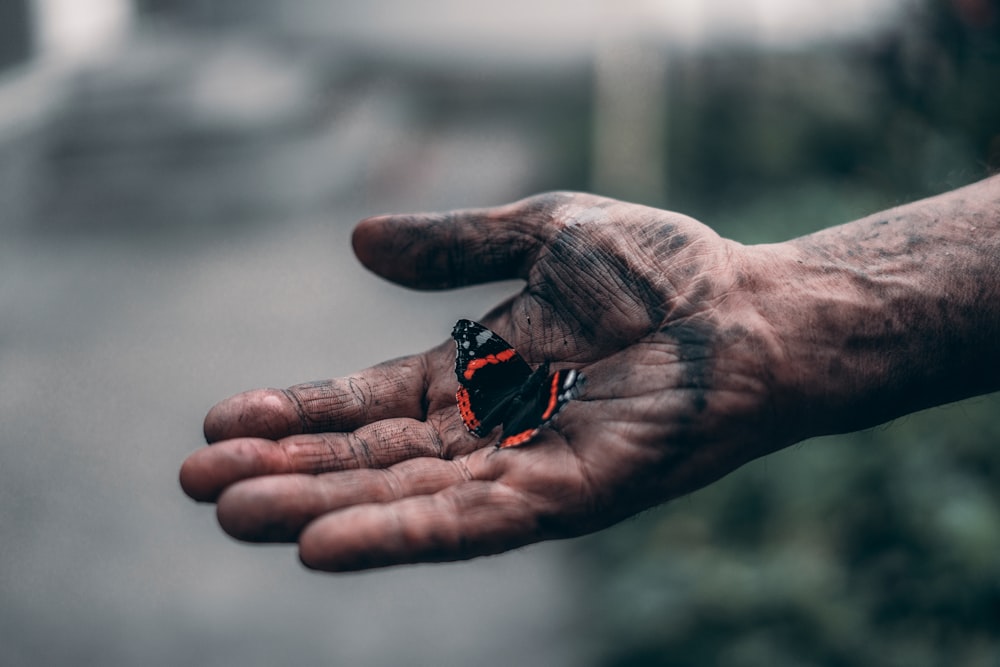 Image credit: Elijah O'Donnell
 If we begin with the NAP then we know that force must be uninvited in order to be classified as aggression. This means that:
1) You must have the ability to willfully invite force.
2) The ability to make a conscious choice is a prerequisite for granting permission of this kind.
3) Because principles must by definition be applied universally, the question of invitation cannot be answered at the level of the individual. We must apply the answer to an appropriate range of classes.
Since humans are capable of making conscious decisions including the invitation of force then we can safely apply the NAP to all humans. And because rocks and trees do not have the ability to invite force, the NAP doesn't apply to them. At these extreme ranges we can be relatively confident in applying the principle appropriately, but as we get closer to the center it will become more complex.
So, what sorts of things may be capable of owning property? We can first establish that non-human animals in general don't have the ability to homestead beyond a very limited degree. Bird nests in unowned trees, or groundhog colonies in unowned land are two of the most extreme cases where we can be reasonably certain that property has indeed been established. Therefore we should consider it immoral to destroy a bird nest in an unowned forest, but the removal of nest material from the rooftop of a home would not be. This is because the homeowner is simply defending their property from the invading bird. These outlier situations are certainly interesting, but lie mostly outside the scope of this discussion.
Thankfully self-ownership is easier to establish, at least when dealing with conscious creatures. Nearly all animals clearly demonstrate an objective link to their own bodies, and an unwillingness to comply with aggression. But a simple reaction to stimuli is insufficient because it doesn't constitute a comprehension of well-being, (a concept we'll address further below). Pain-response, or "nociception", is present in a wide variety of non-mammalian animals and invertebrates that have little in the way of comprehension. We need to find better ways of establishing a conscious understanding of these concepts. And as stated above, the conscious invitation of force is key in the proper application of the NAP.
So what is required to consciously invite aggression?
1) You must understand the options at least at a basic level. E.g, if I go into the slaughter house, I will suffer. If I do not, then I won't. Which means;
2) You must understand the broad effect this will have on your own well-being. I.e. You must be aware of the potential pain and suffering that will occur. Which means;
3) You must be capable of suffering, or experiencing emotional pain.
1 and 2 are difficult to establish without the ability to effectively communicate. Number 3, the experience of emotional pain, is somewhat easier to establish. Emotion occurs at the level of the brain, so an animal must first have a brain. Simple nervous systems aren't capable of pain perception, therefore we can rule out animals without the complexity necessary to perceive and interpret sense data on an emotional level. This conveniently rules out all plants as well. So once we establish number 3, we can then address 1 and 2 by making some assumptions. Since suffering is by definition not desirable, we can safely assume a preference for not suffering as the default for all animals with the capacity for emotional pain. And we assume that if capable, the animal in question would choose not to suffer if given the choice.
Given the above requirement of a sufficiently complex central nervous system and a brain, and assuming a non-suffering preference by default, we can now apply the NAP to all animals who meet this criteria. Using humans as a starting point, we may then follow the taxonomical rank system to help identify additional candidates. This method should cover all animals in class Mammalia without much effort, but I have a hunch it could easily cover much more.